
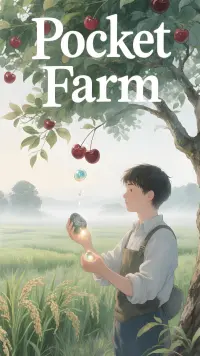
Pocket Farming
After resting briefly at home, Liu Rui loaded another bucket of rice wine onto his bicycle and set off for Xialiang Village.
Shangliang and Xialiang Villages were two neighboring natural villages, each with a population of around two thousand. Their names derived from their locations—one situated on the ridge of the Qing Mountain foothills, the other at its base. In mountainous regions, village names often followed simple conventions, either reflecting the terrain or the dominant surname of the residents.
The Liu family’s distillery had been in operation for decades. Whenever villagers had weddings, funerals, or large gatherings, it was customary to call on the Lius for delivery.
In rural areas, where finances were limited, beer and bottled rice wine were considered luxuries. Most people drank homemade brews, affectionately dubbed "peasant Maotai." These were typically fermented from rice or corn using herbal distiller’s yeast, producing a rich, aromatic liquor. The Liu distillery sold over a hundred pounds of rice wine daily, and though profits were slim, they provided a modest but steady income for the family.
Without the distillery, how could the Lius have afforded to send three children to school in the county town?
By the time Liu Rui returned from Xialiang Village, the sun had dipped behind the towering Qing Mountain, casting long shadows that brought welcome relief from the heat.
As he stepped into the courtyard, the aroma of fragrant dishes wafted through the air, mingling with the sound of Liu Tongtong’s chatter.
On the stone table beneath the osmanthus tree, several steaming dishes were already laid out. Liu Tongtong bustled between the kitchen and the table, setting out bowls, chopsticks, and stools while bickering with Liu Zhi.
Liu Jiahong sat in a wide bamboo chair, watching his grandchildren’s playful squabbling with a smile that crinkled his weathered face like a blooming chrysanthemum.
Zhang Guizhi emerged from the kitchen carefully carrying a porcelain basin filled with a hearty loofah and lean pork soup. She called out to Liu Tongtong, "Stop bickering—can’t you see your brother’s back? Go fetch water for him to wash up before dinner!"
Though only forty, years of hard labor had prematurely grayed Zhang Guizhi’s hair, making her look a decade older.
Spotting Liu Rui pushing his bicycle into the courtyard, Liu Tongtong stuck out her tongue before dashing to the well. A glistening stream of water flowed from the pipe, splashing into the basin with a refreshing patter.
"Brother, wash your face first!" The girl obediently handed him a towel, her voice sweet and eager.
She knew how much her elder brother had sacrificed for their family—how he toiled tirelessly for her and Liu Zhi’s sake. Her respect for him was genuine.
Ruffling her hair affectionately, Liu Rui smiled as he washed his face and hands. The cool well water washed away the day’s heat, leaving him feeling refreshed and invigorated.
The marble dining table, five feet in diameter, was already laden with steaming dishes, their aromas irresistible.
Liu Rui had heard his father say this table had been passed down through generations, its origins lost in time but certainly over a hundred years old. The stone was fine-grained, the craftsmanship exquisite, and most remarkably, the natural black veins in the marble formed a landscape painting—a moonlit scene beneath a tree, a true masterpiece.
In the old days, when the Tea-Horse Road passed by their doorstep, the Liu family’s distillery had thrived, thanks to the steady flow of merchants and mule caravans. Before liberation, they had even built five spacious brick-and-tile houses. But like most families in Qingyun Town, once the trade route declined, the distillery’s fortunes waned.
This dining table bore witness to countless cherished memories for the Liu siblings. As a child, Liu Rui had often napped on it during summer afternoons.
The spread before them was simple but generous: steamed blackfish, braised rabbit, scrambled eggs with tomatoes, stir-fried water spinach, cold eggplant, and the loofah pork soup—a balanced meal of meat and vegetables.
In a city restaurant, such a spread would easily cost over a hundred yuan. Here in the countryside, it was a modest but nourishing feast.
The blackfish had been Liu Zhi’s catch. The rabbit had come from Liu Rui’s uncle, Zhang Zhenzu, the day before. The vegetables were freshly picked from their garden. The only purchased ingredient was the pork—ten yuan’s worth from the market.
This was the beauty of rural life: fresh, healthy food without exorbitant costs. As long as one wasn’t lazy, starvation was never a concern.
Seeing everyone gathered, Liu Jiahong picked up his chopsticks and nodded. "Let’s eat."
The two children needed no second invitation, immediately digging into the feast.
"Mom’s cooking is the best—ten times better than the school canteen!" Liu Tongtong mumbled through a mouthful of food.
"Can’t you talk with your mouth full?" Zhang Guizhi chuckled, placing a piece of rabbit meat on her plate. "Once school starts next week, you won’t get to eat this anymore."
At the mention of returning to school, Liu Tongtong’s cheerful expression soured. Pouting, she focused intently on her plate.
The Liu household was relaxed—no rigid rules like "no talking at the table." Instead, meals were filled with laughter and conversation, often including discussions about the next day’s farmwork and plans.
As the saying went, "You don’t go broke from eating or dressing—you go broke from poor planning." In the countryside, well-managed families made detailed arrangements the night before, ensuring efficiency the next morning.
"Eldest, the fields need weeding. After brewing tomorrow, go check them," Liu Jiahong instructed.
Liu Rui had only taken over farm duties a few months ago and still relied on his mother’s reminders.
"Got it," he nodded. "Mom, your legs aren’t strong—stay off the fields. I’ll handle it."
Zhang Guizhi suffered from severe rheumatism. Light work on dry land or household chores were manageable, but wading through rice paddies would worsen her condition. Liu Rui refused to let her take that risk.
"Fine, I know my limits," she replied, though worry lingered in her eyes.
With their two younger children in middle school at Qingyun County High, monthly living expenses totaled three to four hundred yuan. Next year, high school costs would be even higher. The family’s medical debts weighed heavily on their shoulders—all of it resting on Liu Rui’s still-young frame.
After dinner, the children cleared the table and washed dishes without being told, working together seamlessly. Though spoiled, the Liu siblings weren’t pampered to the point of irresponsibility. Good upbringing ensured they pulled their weight, even during adolescence’s rebellious phases.
Satiated, Liu Rui sat beneath the osmanthus tree, chatting with his parents while watching his siblings laugh and play. A warm, comforting atmosphere enveloped the courtyard.
This is my home, he thought. I must do everything in my power to protect it and create even greater happiness for us all.
 Font
Font Background
 Contents
 Home
Home